At noon Sydney time, ten million addresses disappeared
At 11am Sydney time, the new OpenSearch cluster held about ten million Australian addresses. At noon, the next CloudWatch reading counted just seven addresses.
At 1:00:59pm, the failed logins began. By the time the import was stopped, the audit log contained 184 of them. The cluster had lost almost all its data and stopped recognising the credentials that had loaded it.
Claude Code had been supervising the migration for more than a day. The new cluster was supposed to replace an old one running OpenSearch 1.3.20. It was not yet serving customers, so the production API continued answering searches as if nothing had happened.
That was the first thing the migration got right.
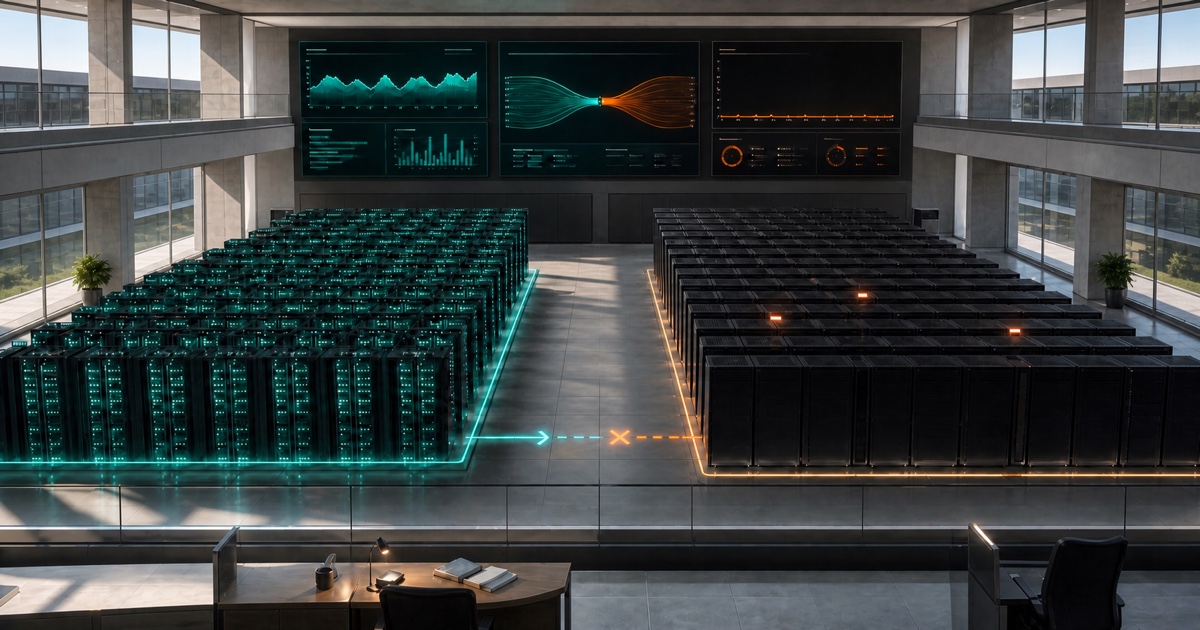
A cluster too old to leave alone
Addressr is an Australian address-validation and search service. It indexes the Geocoded National Address File (G‑NAF), a source dataset of about 16.9 million addresses, in OpenSearch. Its production cluster worked, but it was still on OpenSearch 1.3.20, a version family already past upstream maintenance.
The destination was OpenSearch 3.5. Reaching it safely meant stopping at 2.19 first. Each step had to preserve search behaviour, keep the API available and leave a working path back.
An in-place upgrade would have put the only production cluster on the operating table. The chosen design was blue/green. The old cluster would continue serving while a new one was provisioned beside it. In CI, the automated test suite would run against both OpenSearch 1.3.20 and 2.19.5. The new cluster would be rebuilt from G‑NAF, tested directly, fed copies of real searches and compared with production. Only then would the application switch over.
The switch itself would be a configuration change. If it failed, the old cluster would still be warm.
Claude Code was asked to carry that plan through the repository, the deployment pipeline and the live AWS environment. It could edit the application, Terraform and GitHub Actions workflows; run the tests; follow releases; inspect CloudWatch; and keep working as long-running operations completed. Architecture decisions, risk policy and production gates already lived in the project.
The plan was careful. The first attempt still failed.
The first attempt
The first OpenSearch 2.19 domain came up during the initial attempt. Read-shadowing sent it copies of production searches without using its answers, giving the migration a way to observe real behaviour before cutover.
Then several faults began to overlap.
Credentials drifted between Terraform Cloud, GitHub Actions and the application environment. The shadow client kept sending a password the domain no longer accepted, turning what looked like a healthy soak into a stream of silent authentication failures.
During the full data load, Queensland and Western Australia collided with an hourly snapshot. The loader tried to close the index while the snapshot was in progress and failed. A retry against the small cluster dragged on while shadow traffic competed with bulk indexing.
The cluster was resized to get the load through. AWS began its managed blue/green resize and remained stuck for more than three hours, reporting shard progress that moved forward and then backwards. Authentication failed again after the reconfiguration.
Those failures ended the initial attempt. The new domain was deleted and shadow traffic was disabled. Production stayed on 1.3.20 throughout.
The failed attempt left useful evidence behind. The repository still had a Terraform module for parallel domains, a default-off shadow client, a two-version CI matrix and incident records describing where the plan had broken. It also left a better question: what if the cluster were allowed to finish loading before it saw a single search?
The quiet cluster
The second attempt began with that change in sequence.
OpenSearch 2.19 would be provisioned quiet. No shadow reads. No customer traffic. It would receive the complete G‑NAF dataset, prove its document count and search behaviour, and only then begin warming on copies of production queries.
Before another dollar of AWS capacity was spent, Claude Code changed the loader. If the index settings and mappings were already correct, it would no longer close and reopen the index before loading each Australian state or territory. If a close genuinely collided with a snapshot, it would retry with backoff. CI kept testing both 1.3.20 and 2.19.5. A CloudWatch dashboard established the old cluster's latency baseline before the new cluster existed.
Audit logging was enabled as well. The first attempt had shown the symptoms of the credential failure but not the moment it occurred. This time the migration would be watching.
The fresh domain came online with no query traffic. The loader completed the Australian Capital Territory, New South Wales, Northern Territory, Other Territories and Queensland. Five states were green. South Australia started next.
Six hours later, that job was cancelled by GitHub Actions' timeout.
At first it looked like a capacity problem. Claude Code checked the AWS metrics. CPU was around seven percent. JVM pressure was ordinary. Indexing had been flat at zero for hours. The cluster was not overloaded. It was idle.
Direct probes returned 401. The same credentials still matched in 1Password, GitHub Actions and Terraform Cloud, but the domain rejected them. The new audit log showed 184 failed logins, yet no event that changed the password.
CloudWatch supplied the missing half of the picture. At 11am, the searchable-document count stood at about ten million. At noon, it fell to seven. At 1:00:59pm, the authentication failures started.
That established where the authentication fault lived: OpenSearch's internal user database no longer matched any credential source under the project's control. It did not establish what had changed it. The audit log contained the failed logins, but no initiating event. The index deletion had left no delete event either.
Claude Code initially treated the timing as causation and joined the symptoms into one failure. The evidence showed two separate failures happening at the same time: the index had lost its data, and the cluster no longer accepted the credentials. The cause of each failure was still unknown.
Remove the thing that can break
Changing the password might restore access. It could not make the internal user store a safe dependency. Claude Code stopped the doomed workflow and surfaced the architectural choice. The operator approved removing OpenSearch's username-and-password store from this deployment and replacing it with AWS identity.
The decision became an architecture record before the code changed. The OpenSearch client gained an optional mode that signed requests with AWS Signature Version 4 (SigV4), allowing AWS identities to authenticate without a shared password. Existing users still received the same basic-authentication path unless they explicitly enabled it. The AWS domain policy named only the application role and the loader identity. There was no shared cluster password left to drift.
This was a structural remedy, not a diagnosis. It removed the mutable credential store even though the event that had changed it remained unknown.
The broken parallel domain was deleted and recreated. An unsigned request received 403. The same request signed by an approved AWS identity received 200, and the cluster reported green. The real loader connected through the new path and began indexing.
The long-running local process was killed when its original agent task ended, so Claude Code relaunched it detached from the task and resumed monitoring. The document count started climbing again.
Then, near fourteen million records, one of the two nodes dropped out. The cluster went yellow, the loader fell into escalating backoffs and indexing stopped. When the second node returned, the cluster was green again, but the index had disappeared.
This cluster no longer used OpenSearch's internal user database. Its loader log contained no index close or delete. CloudWatch placed the loss minutes after the node drop: 14.17 million searchable documents fell to zero. The credential failure was gone. The disappearing index was a separate problem.
The weight of the new index
The old 1.3 cluster held the full dataset on two small instances with 12 GB disks. It had also been loaded from scratch. It was reasonable to expect the same shape to hold the same addresses on 2.19.
The metrics said otherwise. The complete 1.3 index occupied about 56 percent of its disks. At only fourteen million documents, the 2.19 domain had reached about 80 percent. It was consuming roughly 1.7 times as much disk per document, and its full dataset with a replica would not fit safely in 12 GB.
The second loss supplied the causal chain that the first had not: sustained 2.19 indexing pressure, a node drop, loader backoff and then a vanished index, with no delete in the loader log. The first deletion's exact initiating event remained unrecorded, but the failure could now be reproduced independently of authentication.
The domain received 20 GB disks. An index template held replicas at zero during the bulk load, avoiding a second copy while data was still arriving and halving write and storage pressure. It crossed both previous failure points with both nodes green. Once all 16,905,824 documents were present, the second copy was added and the cluster returned to green. The controlled rerun supported the diagnosis: the 2.19 load had exceeded the small domain's resource envelope. Because the initiating event behind the first deletion remained unknown, a document-count alarm stayed armed in case the index vanished again.
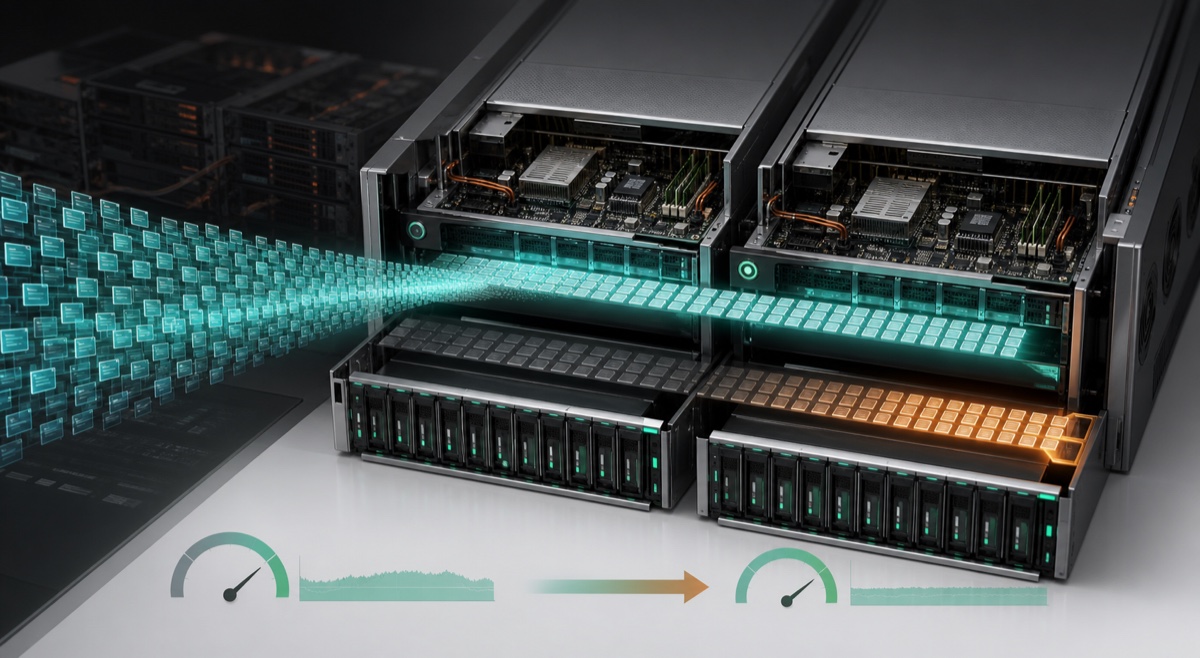
The data was finally complete. It was still not ready for production.
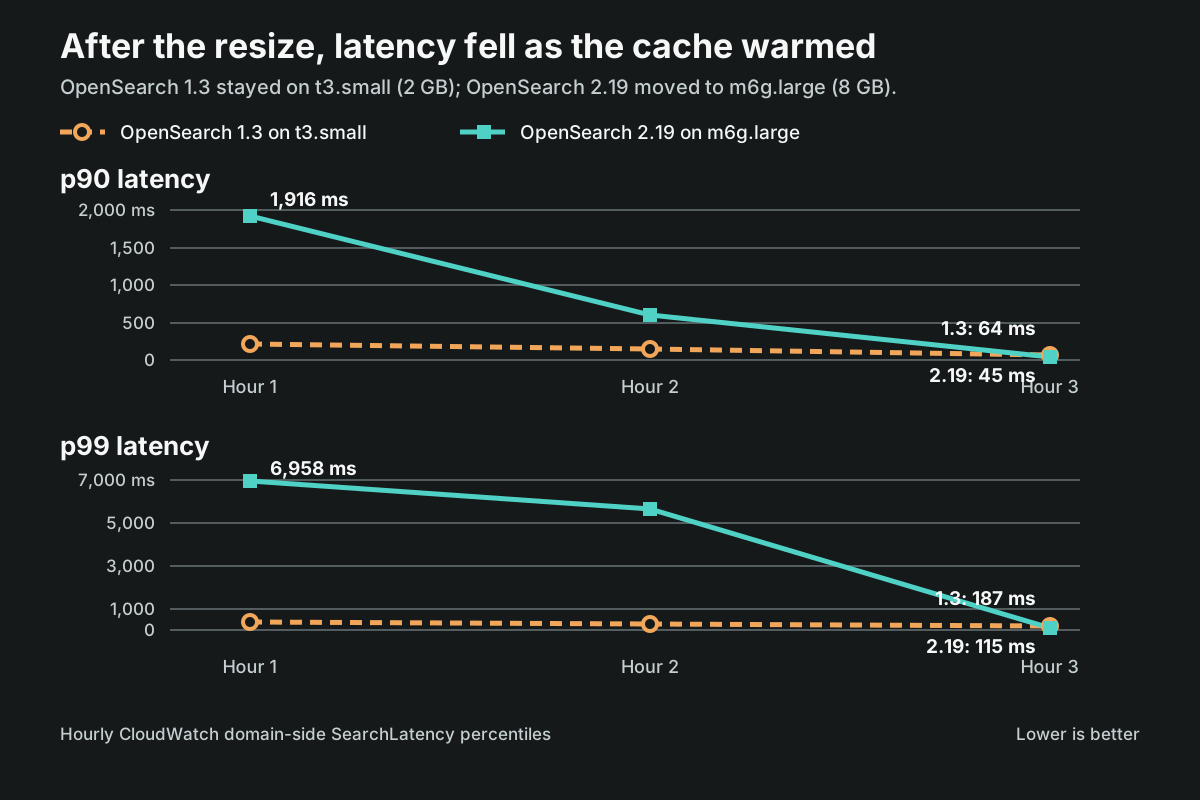
Read-shadowing exposed a new problem. Both clusters were running on two t3.small instances with 2 GB of memory each, but OpenSearch 2.19 was much slower than 1.3 even though its CPU and JVM figures were lower. Its search tail grew into seconds while the old cluster remained steady.
The low CPU was the clue. The larger 2.19 index did not fit in the small instances' memory, so searches repeatedly went to disk. Claude Code resized the quiet 2.19 domain to two memory-optimised m6g.large instances with 8 GB of memory each. OpenSearch 1.3 remained on the smaller hardware. Across three hourly readings under mirrored production searches, 2.19's tail latency fell sharply as its cache warmed and eventually beat 1.3.
To test whether time alone could save the cheaper option, the 2.19 domain was returned to the same t3.small hardware used by 1.3. Over four hourly readings under the mirrored query stream, 2.19 got slower as the soak continued while 1.3 remained steady.
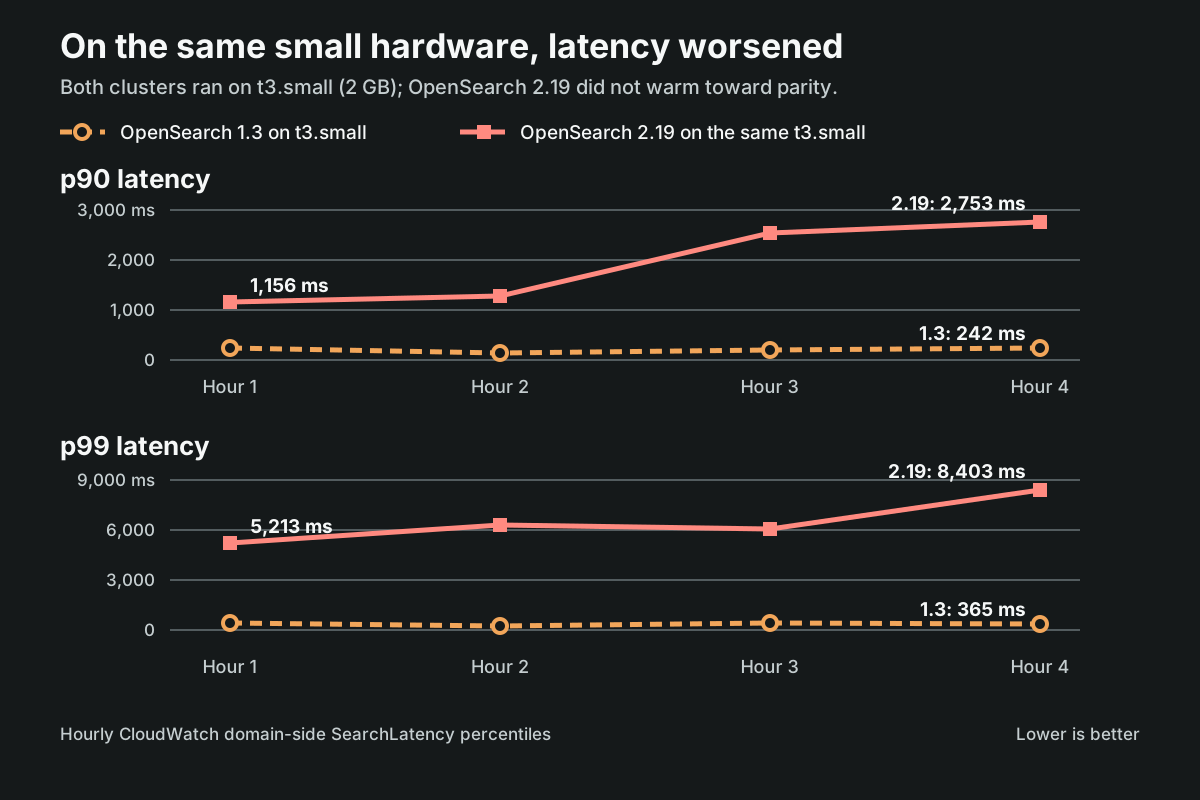
The larger instances were no longer a guess. They were the measured requirement.
The last unsafe green light
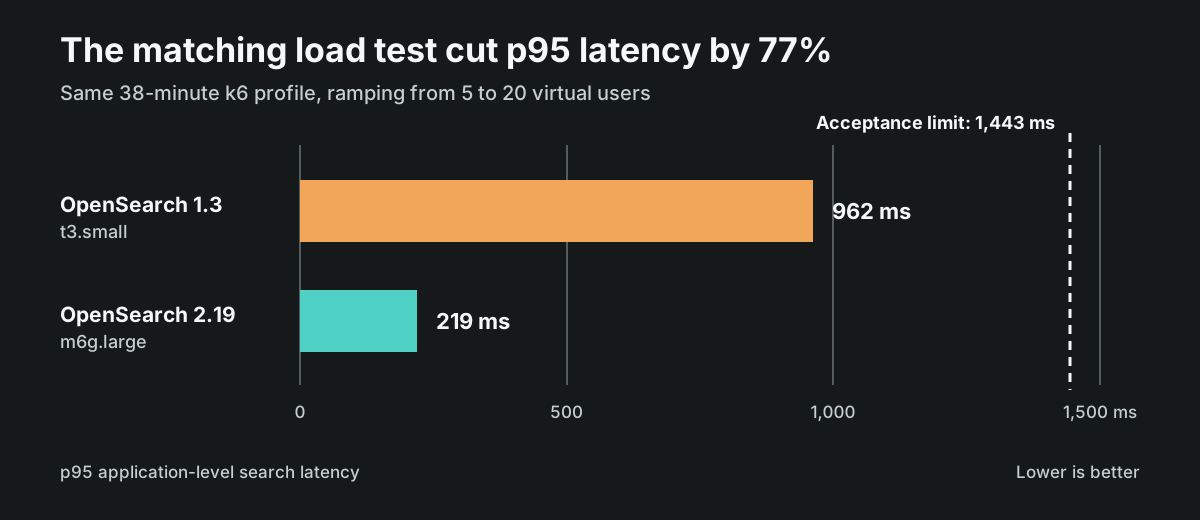
The formal gates now passed. The search-quality baseline returned 14 correct results out of 14. The automated acceptance tests passed against the managed 2.19 domain. A matching 38-minute load-test profile in k6, ramping from five to 20 simulated concurrent users, had measured the old cluster at a 95th-percentile search latency of 962 milliseconds and set the acceptance limit at 1,443 milliseconds. Against 2.19, the same profile completed 38,459 requests with no failures and a 95th percentile of 219 milliseconds.
One green light was still lying: the deployment health check could pass even when search was broken.
The deployment platform used /health to decide whether a new application version was safe. But that endpoint returned a static healthy response without contacting OpenSearch. A release with the wrong OpenSearch host or broken SigV4 configuration could therefore pass the rolling-deployment check, reach every instance and fail only when a customer searched.
Claude Code changed the health check to ping the configured OpenSearch cluster. A sustained connection or authentication failure now returned 503 and triggered the platform's automatic rollback. A kill switch could restore the old shallow check if the new dependency itself caused trouble.
At the first cutover, the deployment changed the primary host and authentication mode together. The old 1.3 cluster remained warm while the platform rolled the change through its instances and checked each one. Search stayed available. The smoke tests passed. Production was running on OpenSearch 2.19.
Once the quarterly data-refresh workflows had moved to SigV4 through GitHub's short-lived AWS identity, first with one small territory as a canary and then with the remaining eight states, the 1.3 domain was decommissioned.
The migration that had already failed twice was complete.
"There is an OpenSearch v3 as well, isn't there?"
That question arrived after the 2.19 migration was complete.
The second upgrade began with something the first had never possessed: a working migration system.
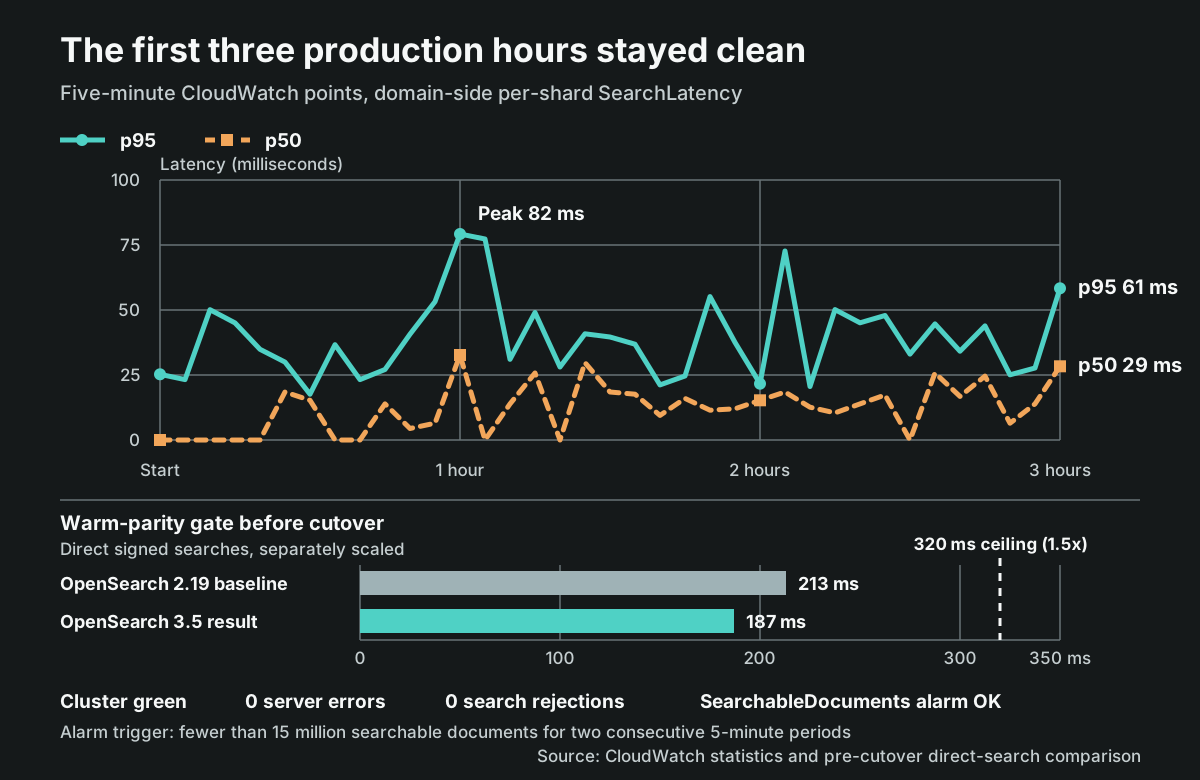
CI replaced the retired 1.3 leg with OpenSearch 3.5 while retaining 2.19 as a compatibility target. The same Terraform module provisioned another quiet parallel domain. The same identity model secured it. The loader ran a small canary, then rebuilt all 16.9 million addresses. The same quality tests, document alarm, latency dashboard and read-shadow path checked the result. In a warmed direct-search comparison, 2.19's p95 was 213 milliseconds. That set the 3.5 parity ceiling at 320 milliseconds, or 1.5 times the baseline. OpenSearch 3.5 passed at 187 milliseconds.
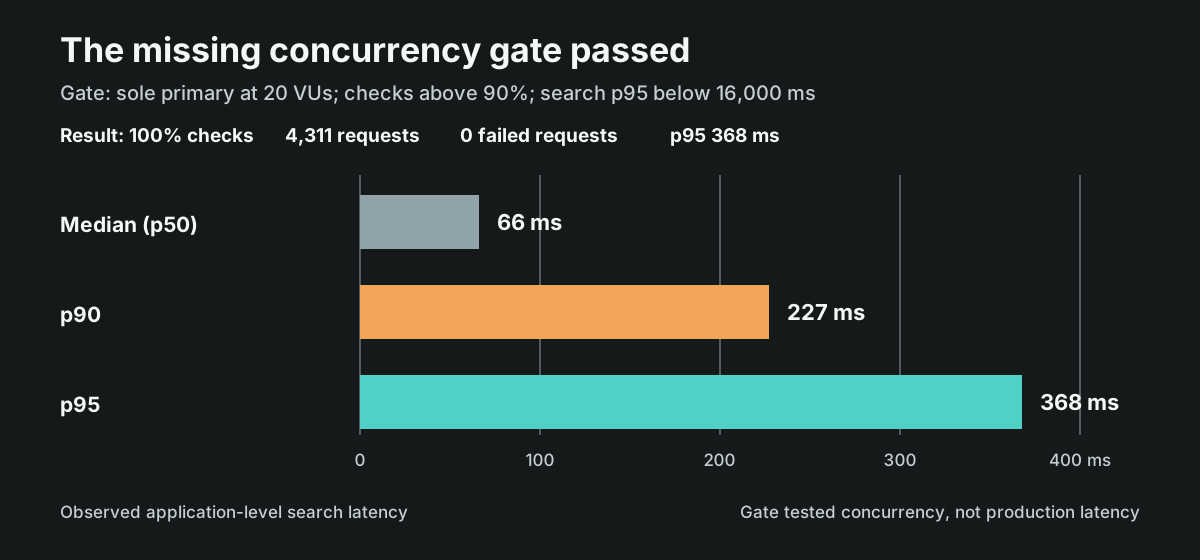
The machinery did not make the cutover automatic. Before each release, an agent reviewed the evidence and could stop the cutover. It judged how much damage a failure could cause and how likely that failure was after the safeguards already in place. Those two judgements produced an overall risk rating. A medium or high overall risk stopped the release. This cutover was rated medium risk because one important condition had not been exercised. Read-shadowing had replayed the normal production query stream, but the 3.5 domain had never acted as the sole primary under the load test's maximum concurrency.
Claude Code ran the missing test instead of bypassing the gate. The 3.5 domain had to act as the sole primary for 20 simulated concurrent users, more than 90 percent of k6 checks had to pass, and application-level search p95 had to remain below the harness's 16-second ceiling. A shortened run ramped to 20 users, then held them against a local application pointed directly at 3.5 over SigV4. In four and a half minutes it completed 4,311 requests. Every check passed, there were no failed requests, and p95 search latency was 368 milliseconds. The test exercised the missing concurrency condition; it was not a comparison with production latency. With that likelihood reduced by evidence, the agent reassessed the release as low risk.
With the concurrency evidence in place, production cut over to 3.5. Over its first three hours as the sole primary, the 3.5 domain stayed green with the full dataset, no server errors and no search rejections. Across 37 five-minute CloudWatch readings, domain-side, per-shard p95 SearchLatency ranged from 18 to 82 milliseconds and ended at 61 milliseconds. The p50 stayed at or below 34 milliseconds and ended at 29 milliseconds. The separate CloudWatch SearchableDocuments alarm remained OK; it would have fired if the count stayed below 15 million for two consecutive five-minute periods.
After the operator accepted the loss of the warm rollback domain, the 2.19 infrastructure was removed. Its CI leg remained, preserving code compatibility until 2.19 reaches end of life.
By the end of the post-cutover watch, OpenSearch 3.5 was the only search domain left running.
What made the upgrade safe
Claude Code wrote client code, tests, Terraform and workflows. It followed CI runs, waited for AWS operations, read logs, compared metrics and resumed work when long-running jobs finished. Those capabilities mattered, but they were not enough on their own.
This is a case study of one migration, not a controlled human-versus-agent benchmark. It cannot establish whether Claude Code was faster or cheaper than an experienced engineer working alone.
The reusable part was the delivery system around the agent. It gave reasoning somewhere concrete to land. Architecture decisions constrained the options. Tests bounded search behaviour. Terraform made each domain reproducible. Shadow reads exposed performance without trusting the new answers. CloudWatch made silent failure visible. The risk gate turned unease into a missing experiment. The deployment health check kept a bad configuration from becoming a fleet-wide outage.
The human still made the consequential choices: change the migration sequence, replace the authentication model, accept the larger instances, authorise each cutover and decide when to remove the rollback domain. Claude Code carried those decisions through the delivery system and returned with evidence for the next one.
It also made mistakes. It initially treated coincidence as causation, misread a per-state loader percentage as total progress and began with a domain that was too small. Each mistake met a deterministic signal before production traffic moved.
Claude Code did not need to be right the first time. It needed to discover when it was wrong before customers did.
The path from OpenSearch 1.3.20 to 3.5 contained a rolled-back attempt, two vanished indexes, an authentication redesign, repeated full-data loads, a sizing reversal and two production cutovers.
Customers saw no outage.
Keep following The Shift
A practical newsletter about AI engineering, software delivery, and the systems around them.